Showing posts with label undeserving poor. Show all posts

Monday, 25 April 2016

Neoliberalism and Education


This is a blog about education but I was struck at how so many of the themes the author recognises are similar to how many therapists conceptualise the world.

Many of these young men negotiated their identities

I consider the act of ‘aspiring’ a negotiation; a continual process of desire, reflexivity, defense mechanisms and guarding against shame as one comes to understand

As the young men in my study came to navigate their schooling and the labels placed upon them, they found ways to constitute themselves as ‘subjects of value’ though it is a process that involves daily reaffirmation.

some students who embody certain desirable characteristics are saved, while many students are written off from the moment they enter the school building.

they were adept at discussing how their current constraints were in contrast to the rhetoric of achievement and social mobility.

white working-class British children are less resilient 

My time spent with these white working-class boys, in an era of high-stakes testing and extreme pressure, showed me how fear and shame can haunt working-class relationships to education.


Please read the whole article. What did you think?


Monday, 9 May 2011

Thinking Allowed

An extraordinary interview with the social science researcher, Tracy Shildrick. People who depend on others to provide them with food and clothes 'without exception' do not describe themselves as poor but blame each other for being 'feckless.' Ms Shildrick and her fellow researchers were surprised by the levels of poverty they found and with some of the attitudes of the people living in poverty, which for me describes the chasm between the poor and the not-poor.

Here's the report the interview is based on but I strongly urge you to listen to and hear the rather shocking conclusions.

If you do no other work on poverty this month, please listen to this.

Tuesday, 22 March 2011

Only Connect

via Johann Hari . . .

We call our schools “comprehensive”, but in fact – under both political parties – they are ruthlessly socially segregated. Across much of the country, the wealthy kids are bunched together in “good” schools, and the poor kids are penned off in “bad” schools. British kids are segregated by their parents’ house prices – the “catchment area” – and this is then made even worse by the grammar schools and private schools Starkey champions. So the left-over schools are made up of left-out kids like Jamie’s, or my Trocadero friends, and they have to climb a mountain every day to do the basics. Where there is a concentration of chaotic kids, the school will be chaotic.

There is an alternative – and it has been demonstrated best in, of all places, the city of Raleigh, North Carolina. Ten years ago, their school system was in a familiar mess, and they passed a simple law to try to solve it. No school could have more than 40 percent of its kids on free school meals, or 25 percent of who were a grade or more below their expected level in reading or maths. Suddenly, the kids who needed most help wouldn’t be lumped together. Kids like Connor and Angelique would be broken up and spread out across the school system, where schools could give them the attention they needed.

The results were startling. Within a decade, Raleigh went from one of the worst-performing districts in America to one of the best. The test scores of poor kids doubled, while those of wealthier children also saw a slight increase. Teenage pregnancies, crime and high school drop-out rates fell substantially.

Wednesday, 2 February 2011

The Law Is The Law Unless You're Poor.

Julie Baker and Stewart Evans, Directors of the Care Sector Trust, defrauded their company of £54,000 and this week received a 9 months sentence, suspended for 2 years, and must complete 300 hours of community service.

They received £337,000 public funding for supplying courses that would support homeless people and ex-offenders back into work, ordered staff to forge signatures and claimed funding for courses that never occurred.

Karen Clancy worked on and off as a cleaner cash in hand while on benefits. The total of her benefits, including housing and council tax benefit, child benefit and income support over some years came to £37,000. She went to prison for 14 months.
Judge Richard Bray said he could not overlook "such calculated fraud."

"I appreciate your home circumstances but it is no good blaming the judge. You brought this upon your own children."
Actually, it was Judge Richard Bray who deprived children of their only parent, put them into care and made them and their mother homeless.

Feelings of shame, shock, humiliation and loss of status might be common to both Karen Clancy and Julie Baker but I wonder if the intensity of those feelings might be greater for Ms Clancy? As well as being in prison, as well as worrying about her children and what's happening to her furniture, photo albums and cutlery when her house is cleared, when she comes out of prison she will also have to replay £37,000 on a weekly gross income of around £160. Returning to work  after her sentence will be very difficult indeed. What are the chances, do you think, of her defrauding once more? If she does won't this just prove how basically untrustworthy she is, a perpetual offender?

I’m genuinely interested to see how Julie Baker, Stuart Evans and those MP’s who’ve also been imprisoned for fraud get on in future. The DWP book ‘Barriers to employment for offenders and ex-offenders’ referenced above notes that ‘morality’ is one of the major concerns for prospective employers but I’m not sure this is totally accurate.

Jeffrey Archer, a millionaire who was imprisoned for fraud was made a Peer and is doing charity auctions. Jonathon Aitkin, another millionaire who was imprisoned for perjury still owes money to creditors and heads a Government task force on prison reform.

One of the major determinants of prospects after coming out of prison seems to be personal income. And another seems to be personal contacts. All of which reinforces the research that suggests that the poor are perceived to be more guilty than the rich simply by virtue of being poor.

Monday, 8 November 2010

Empathy as an economic tool

The long-term unemployed are likely to be pushed into 4 weeks full time voluntary work or lose their entire income for 3 months. The Arch Bishop of Canterbury believes, "It can make people who start feeling vulnerable feel more vulnerable.”

Like so much of our public discourse the arguments are presented out of context and we’re encouraged to polarise, so it may be worth some analysis of this situation.

Many unemployed people already volunteer. This is recognised by the Department for Work and Pensions who limit the number of hours that an unemployed person can volunteer to 16 per week so that it doesn’t get in the way of job seeking. How this squares with 35 hours of full time voluntary work isn't addressed by the new proposal.

Those of us who are angry with people who live on benefits as a ‘lifestyle choice’ may be interested in the following and the comments afterwards.

The DWP’s own research offers some insight into unemployed people’s perception of voluntary work, one of the most important things to note is that people who are unemployed are also very bored.

http://research.dwp.gov.uk/asd/asd5/71summ.asp

For some people this boredom is a spur to action, for others it is the beginning of a decent into depression, mental illness and crime. Being unemployed means that you can’t afford to do anything much. Things that employed people on a decent wage take for granted – taking public transport to a free gallery or museum or a beautiful park – become nearly impossible for the unemployed. Normal social life becomes restricted – you can’t buy a round in the pub, or go on shopping trips or other recreational events with friends. Holidays are out of the question. Children’s normal growth becomes a crisis – a £20 pair of shoes is a quarter of a week’s income for a single parent with one child. (Who are these families with 10 children rolling around in cash in a million pound house? No actual figures are available, which suggests they’re a useful aberration for the right wing media and people who need to whip up hatred.)

Young unemployed men in particular seem to be vulnerable to depression which may have something to do with their parallel poor achievement at school. Prisons are heaving with people who simply cannot read. Please read this report:

Literacy problems in the prison population are often compounded by a wide range of emotional, learning, and/or attention deficits, including:

Child abuse and neglect, linguistic impoverishment in the childhood home, low verbal ability, uncorrected visual and hearing impairments in childhood, unskilled teaching in the junior school and the mistaken conjecture about literacy practice, closed head injury and substance misuse, low non-verbal ability, childhood hyperactivity-impulsivity and inattention, impairments in empathy and social cognition, current anxiety and depression, and – often as a default and catch-all explanation – developmental dyslexia (Rice and Brooks 2004:4).

Those unemployed people who are not already doing some kind of formal or informal voluntary work are, I propose, unlikely to be able move instantly from a long term existence of extreme boredom to a 35 hour week. When they don’t they will lose all their income. Consider what that really means. I know we’re supposed to not think for ourselves and to absorb what we’re told about feckless spongers living a life that many of us envy but it’s not true. It’s not true. When you lose benefits you lose your home. There are not enough hostel places. Begging and street or hidden homelessness or prison will be obvious outcomes. Consider the effects of that on a person. If that's too wishy washy, consider the effects on the economy.

The premise behind these proposals is not a bad one. Getting into a positive daily rhythm, increased physical activity and social interaction are good for all of us. I trust that IDS has offered this proposal based on sound empirical evidence, but it lacks understanding and it lacks empathy. No one involved in this proposal has one pair of worn out trainers and one and a half tracksuits with some ancient underwear as their entire wardrobe. What is this persons self esteem likely to be like? What about their internal locus of evaluation? If this person is the best authority on their life, what might this suggest about their life? How is their self-concept expressed? How much denial and distortion are they indulging in and how much are we?

Rowan Williams is more likely to be correct in his analysis of how increasing compulsion and surveillance may affect the long term unemployed, simply because he starts from an attempt at empathy. Empathy doesn’t have a role in pubic policy and that's one reason why we have so many long-term unemployed people.
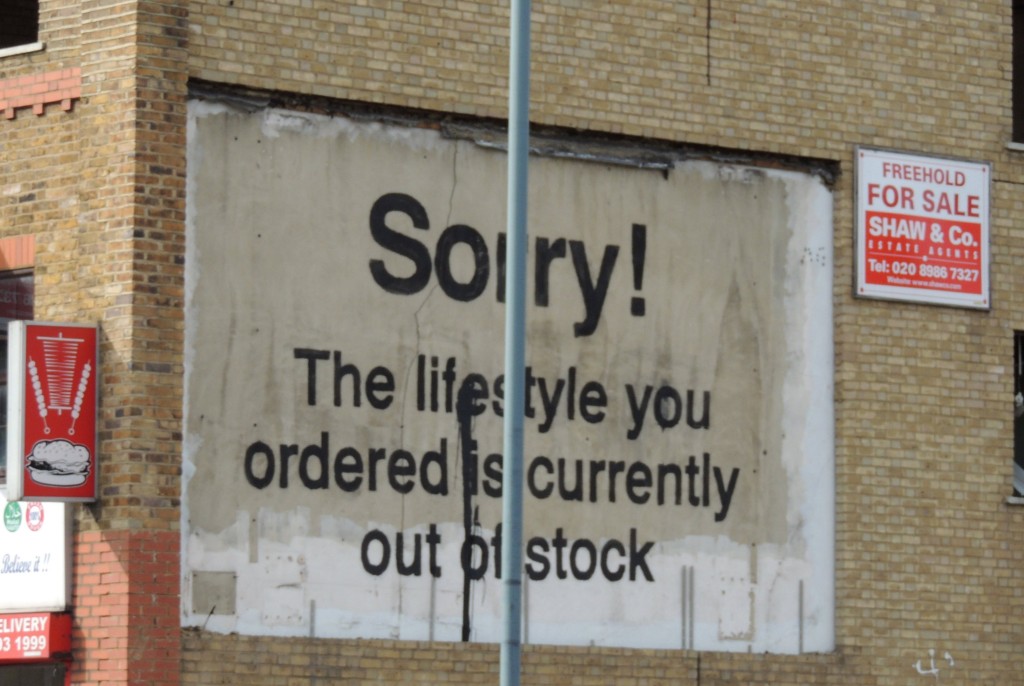
Monday, 20 September 2010

A Short History of British Poverty

Historically, social responses to poverty tend to fall into two groups:
  • ‘relief’ of beggars and paupers
  • a profound mistrust and fear of the poor.
Queen Elizabeth the First was the first lawmaker to recognise the need for poverty to be addressed by society rather than by individuals. Prior to this, individuals who felt moved to help their neighbors did so but there was no obligation to. The Church, mainly through convents, abbeys and other religious houses, had offered shelter, food and at times work for the destitute but the Reformation broke this chain of support.

In 1563 the first Poor Laws were introduced which recognized for the first time that poor people were part of a community and that the community, in the form of the parish, must help support them. The system was funded by taxation and each parish was required to provide employment.

The poor were categorized into the deserving poor – infants, the very elderly, the very infirm and families who had temporarily fallen on difficult times; the undeserving poor who were considered a threat to society – beggars, travelers, migrant workers; the deserving unemployed – people who were able to work but unable to find employment.

It’s worth noting the political and social circumstances that preceded these laws. More people were simply remaining alive and there was less food. The Enclosures Act devastated the peasant farming tradition as private landowners found it more profitable to have sheep on their land rather than people, or to increase their personal area of farmland and decrease the number of individuals working it. Prior to the Enclosures Act individual family groups grew their own food in what we might call a smallholding, now they were simply turned out of their homes and made vagrant. Those that didn’t die of starvation or illness came to the city. The numbers of the very poor, the very weak, potential carriers of disease and the very angry increased and it was the fear of civil unrest that caused the Poor Laws to come into being rather than any inherent concern for individual welfare.

Laws altered over time, becoming more or less penalizing. Beggars could be whipped and have their earlobes burned through, be imprisoned and executed. They were returned to their own parishes, limiting where they could live. Houses of Correction, established prior to Elizabeth I and continued well after, were variously places where the poor were punished or rehabilitated: whatever the case, poverty is perceived as a fault that requires correction.